

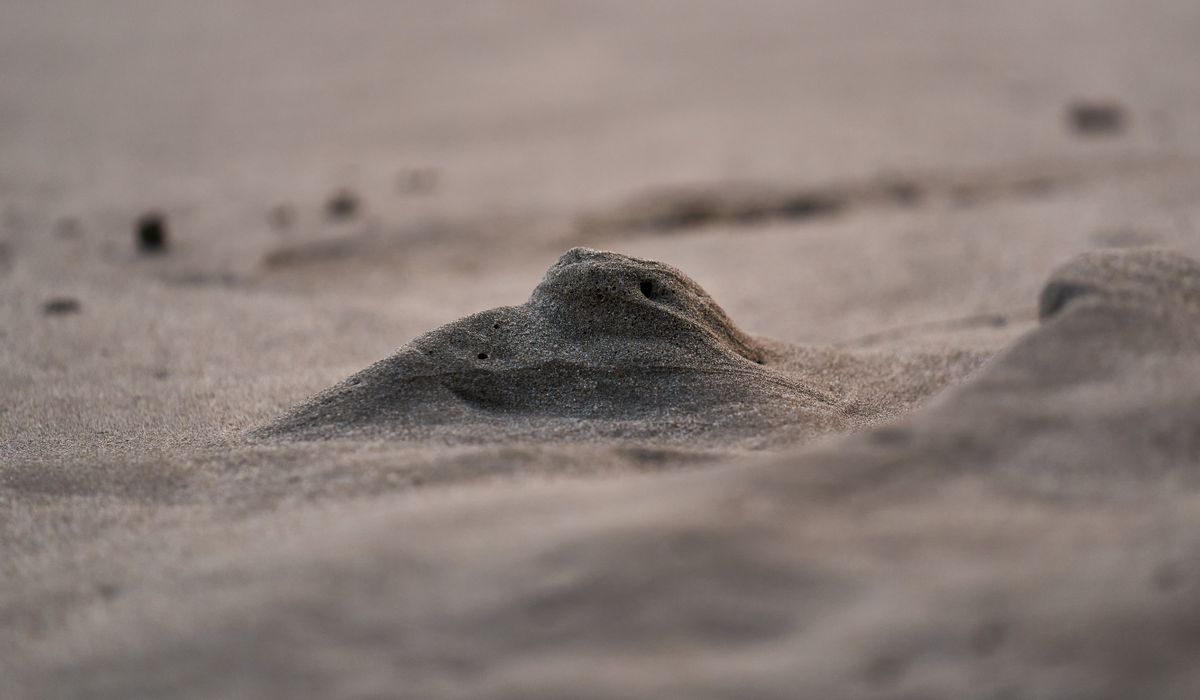
Chalky soil divides gardeners like nothing else. On a coastal chalk slope you are dealing with ground that is alkaline, free-draining and often only a spade's depth above rock, with salt-laden wind thrown in. It sounds inhospitable, yet some of the loveliest plants in Britain come from exactly this kind of ground.
Why Chalk Changes Everything
Chalk typically sits between pH 7.5 and 8.5, which locks up iron, manganese and phosphate so that many plants cannot access them. It also drains fast: a summer downpour can disappear within an hour, leaving the surface dry again by evening. Add coastal wind, which dries foliage and scorches tender growth, and you have a site that rewards a particular kind of plant.
The good news is that the plants suited to chalk are among the most generous in the garden. Grey and silver foliage, aromatic leaves, long flowering seasons and a natural tolerance of drought all come as standard. What they cannot abide is rich, wet, heavily manured ground, which pushes soft leafy growth that flops in wind and dies back in winter.
Lavender, Rosemary and Cistus: The Reliable Three
If you planted nothing else on a chalky coastal plot, these three would carry the garden from spring to late summer while asking almost nothing of you.
- Lavender — grow Lavandula angustifolia for scent and hardiness. 'Hidcote' and 'Munstead' stay compact at around 45cm, while Lavandula x intermedia 'Grosso' makes a taller, looser hedge. Space plants 30–45cm apart and clip after flowering.
- Rosemary — now botanically Salvia rosmarinus, but none the worse for it. 'Miss Jessopp's Upright' will make a dense 1.2m evergreen hedge that shrugs off salt spray, while prostrate forms tumble beautifully over a low wall or gravel bank.
- Cistus — the rock roses are the great chalk specialists, flowering in June and July in shades of white, pink and crimson. They are short-lived, often 8 to 12 years, so take softwood cuttings every few years to keep replacements coming. Plant cistus in spring rather than autumn, so the roots have a warm season to settle.
Plant with a Lean Hand
The most common mistake on chalk is being too kind at planting time. Old advice about filling the hole with rich compost and a handful of fertiliser is exactly wrong here. It gives the plant a soft, pampered start and roots that never bother to travel.
Instead, dig a hole roughly twice the width of the rootball and fork the base to break up any pan. Mix a couple of handfuls of garden compost or leaf mould through the backfill — enough to hold a little moisture around new roots, no more — and add a generous handful of horticultural grit if the ground is heavy or has pockets of clay. Plant so the rootball sits level with the surrounding soil, firm gently, and water in well.
After that, do not mulch with manure or rich compost. A 5cm layer of gravel or grit is far better: it keeps the collar of the plant dry, suppresses weeds, reflects heat upwards and looks entirely at home on a chalky slope.
Native and Coastal Companions
Our own chalk grassland and sea cliffs support a superb range of drought-tolerant natives that sit comfortably alongside Mediterranean shrubs, feeding pollinators and holding the soil on a windy site.
- Sea thrift (Armeria maritima) — tight pink pom-poms from late spring, happiest in a gravel pocket or on a wall top.
- Wild thyme (Thymus polytrichus) — a low, spreading carpet of scent, perfect between stepping stones.
- Kidney vetch (Anthyllis vulneraria) and bird's-foot trefoil (Lotus corniculatus) — both fix nitrogen and colonise bare chalk beautifully.
- Sea holly (Eryngium maritimum) and sea lavender (Limonium) — architectural blue and a froth of tiny flowers in late summer.
- Wild marjoram (Origanum vulgare) and viper's bugloss (Echium vulgare) — magnets for bees and butterflies.
Fill the gaps with santolina, teucrium, phlomis, perovskia and sedum, which share the same tastes. Plant in generous drifts rather than singly, so the planting knits together and shades its own roots.
Watering, Pruning and the Long View
New plants need help for their first two summers, and that help is best given thoroughly and rarely. A slow, deep soak every ten days to a fortnight in dry spells sends roots downwards; a daily sprinkle encourages them to stay at the surface.
Pruning matters just as much. Clip lavender lightly after flowering, taking the flower stems and a little of the green growth, but never cutting into old, bare wood — it will not regrow. Rosemary is best trimmed after it flowers in spring, again staying within leafy growth. Cistus needs almost nothing beyond a light tip-back to stop it getting leggy.
Above all, resist feeding. No general-purpose fertiliser, no liquid tonics through summer. On chalk the conditions are already lean, and lean is what these plants want. Give them sun, sharp drainage, a gravel mulch and a little patience, and they will reward you with a garden that looks better in a hot August than most of the lush ones down the road.



John Doe
14 January, 2022Having no content in post should have adverse..
Chauffina Carr
10 April, 2022We use these tests all time! Killer stuff!
Jim Séchen
16 July, 2022Thanks for all the comments, everyone!