

Poor Sand Is Exactly What You Want
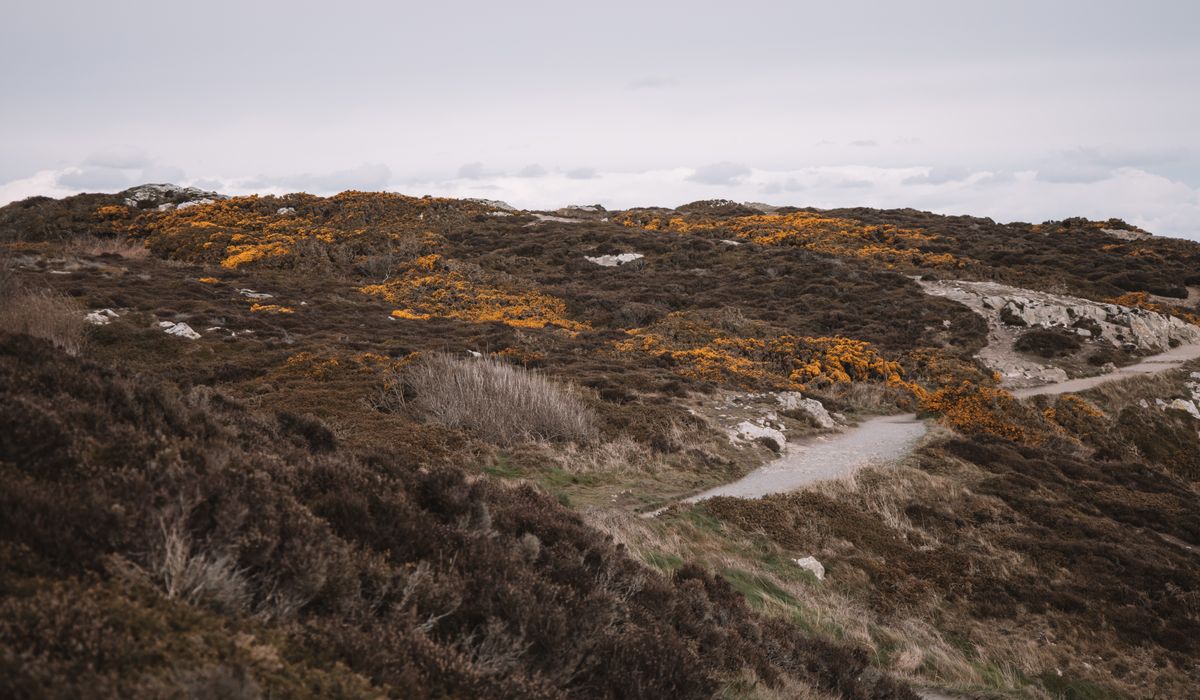
If you garden within a mile or two of the British coast, the chances are your soil is thin, pale, free-draining and hungry. It blows about in March, bakes hard in July, and refuses to hold on to anything you plant in it. Most gardening books treat this as a problem to be corrected with barrowloads of compost and a generous dressing of fertiliser.
For a wildflower meadow, it is the single greatest gift you have. Our native meadow flowers evolved on exactly this sort of land: unimproved, nutrient-poor, grazed close and never fed. Give them rich, fat soil and the grasses and thuggish weeds will romp away and smother them. Give them sand and a bit of careful management and they will outcompete everything. So the first rule of coastal meadow-making is a counterintuitive one: do not enrich the ground, and never feed it.
Clearing the Ground Properly
Perennial weeds are the meadow-maker's real enemy, and coastal plots tend to specialise in them. Couch grass, creeping thistle, dock, bindweed and ragwort will all happily colonise bare sand, and if you sow into an infested patch, your expensive seed will be lost within a season.
Give yourself a full growing season to clear the site, ideally starting the autumn before you intend to sow. Dig or fork out the worst of the roots by hand, then keep the ground bare by repeated shallow hoeing or rotavating every three or four weeks through spring and summer. Each pass kills the fresh growth and exhausts the root reserves. If you have a small area and want less work, mow the weeds hard to the ground and cover the plot with black polythene or damp-proof membrane weighted with sandbags for at least four months over the warmer half of the year. The darkness and heat see off most perennials.
- Never use a weedkiller and then sow straight away – leave at least six weeks of weathering.
- Do not import topsoil or compost to "improve" the seedbed. Scrape the surface level and be done.
- If the plot is very sheltered and weedy, expect to repeat the clearance more than once.
Choosing Native Seed for a Salt-Laden Site
Exposed coastal sites need plants that can shrug off wind, salt spray and summer drought. Stick to British native stock – ideally of local provenance if you can find it through a county wildlife trust or a specialist grower.
Reliable performers on poor coastal sand include ox-eye daisy, wild carrot, yarrow, lady's bedstraw, bird's-foot trefoil, common knapweed, field scabious, viper's bugloss, wild thyme, selfheal and autumn hawkbit. On sandier, dune-like patches, add sea campion and kidney vetch. Grasses should be modest, fine-leaved sorts such as sheep's fescue, creeping red fescue and common bent; avoid anything vigorous.
The most important species to include, though, is yellow rattle. This native annual is semi-parasitic on grass roots and quietly weakens the surrounding grasses, opening up space for flowers to establish. Sow it with your main seed, at roughly 0.5 to 1 gram per square metre, and treat it as the engine of the whole meadow.
Sowing: Timing, Rates and Treading In
Sow in early autumn, from late August to mid-October, while the ground is still warm and before the worst of the winter gales. Rake the cleared surface to create a fine, crumbly tilth about a centimetre deep.
Mix your seed with dry sand or fine silver sand at a ratio of about ten parts sand to one part seed. This bulks it out so you can see where you have been, and it helps you spread a light sowing evenly. Aim for a total seed rate of roughly 2 grams per square metre for a wildflower-and-grass mix, or 1.5 grams if you are sowing flowers such as yellow rattle into existing thin grass.
Scatter half the seed walking north to south, then half walking east to west. Firm it in by treading with flat feet or rolling with a light roller – on sandy sites, seed needs good contact with the soil to germinate. Water gently if a dry spell follows, but do not mollycoddle it.
The Annual Cut: Once, and Late
In the first year, resist the urge to mow often. Let the seedlings establish, and if annual weeds appear, strim them high at about 10cm rather than scalping the plot.
From the second year onwards, manage the meadow with a single annual cut in late summer, ideally mid-August to early September, once the majority of flowers have set and dropped seed. Cut to about 5–10cm with a strimmer, scythe or mower on its highest setting. Then – and this matters more than the cutting itself – rake off all the cuttings and remove them. Leaving them to rot feeds the soil and undoes everything you have worked for.
If growth is rank or the site is very fertile, a second light cut in early March can tidy winter growth without harming emerging rosettes.
Fine-Tuning Year on Year
Expect a slow start. A coastal sand meadow typically takes two to three years to look like anything much, and four or five to reach its best. In the meantime, watch which species thrive and which sulk.
- Top up yellow rattle by sowing a little more each autumn if grass is still dominant.
- Hand-weed any thistles, docks or ragwort before they set seed, usually in June.
- Leave a few centimetres of standing stems through winter for insects and seed-eating birds.
- Record what flowers and when; your own notes will be more useful than any book.
Do this patiently and you will end up with something rare and lovely: a salt-bitten, wind-scoured strip of native flowers that asks almost nothing of you and gives a great deal back.



John Doe
14 January, 2022Having no content in post should have adverse..
Chauffina Carr
10 April, 2022We use these tests all time! Killer stuff!
Jim Séchen
16 July, 2022Thanks for all the comments, everyone!