

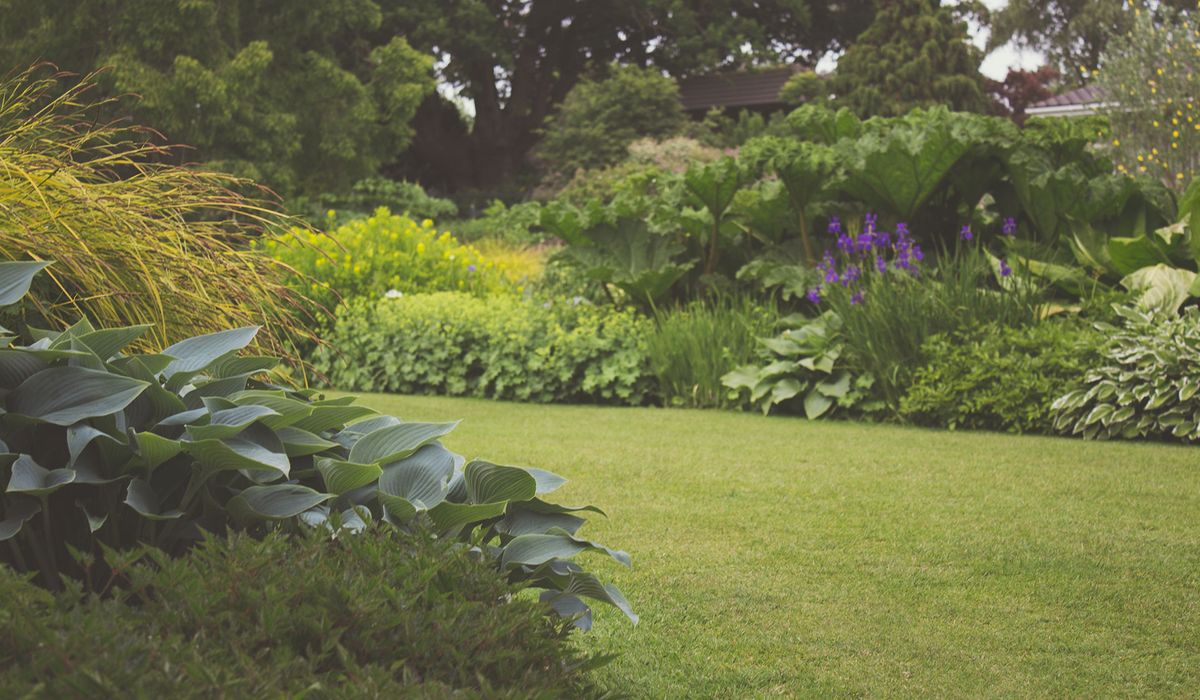
Why Sandy Coastal Soil Struggles
If you garden within sight or sound of the sea, you will know the feeling: you water in the evening and by the following afternoon the border is dusty again. Sandy soil is made of comparatively large particles with wide gaps between them, so water runs straight through rather than clinging to the surface of the grains. Every drop of rain takes dissolved nutrients — nitrogen, potassium, magnesium — down below the reach of most roots.
Add salt-laden wind, a fair bit of bare ground scoured by gusts, and a naturally low level of organic matter, and you have a plot that is free-draining to a fault. The good news is that sandy ground is also easy to work, warms early in spring and never sits waterlogged in a wet January. What it lacks is humus. That is the one thing you can make at home, in quantity, for nothing.
Building Compost That Suits a Coastal Plot
Good compost is simply a balance of materials that rot down together. Aim for roughly equal volumes of soft green material and tougher brown material, layered like a rough lasagne.
- Greens: grass clippings, vegetable peelings, annual weeds pulled before they set seed, coffee grounds, spent cut flowers.
- Browns: torn cardboard, scrunched paper, straw, autumn leaves, chopped twiggy prunings. Woody material keeps the heap open and stops it turning to slime.
- Coastal bonus: seaweed gathered loose from the strandline. Collect only what has already been washed ashore, take it in modest amounts and never cut or pull it from living plants or rocks. It is rich in potassium and trace elements, breaks down quickly, and is excellent for flowering and fruiting plants.
- Accelerators: comfrey leaves, nettle tops, a little well-rotted horse manure.
Build the heap in a bin or a bay, water it if it is dry, and cover it with a tarpaulin weighed down with stones — coastal wind will desiccate an open heap in a fortnight. Turn it every few weeks if you have the energy. It is ready when it is dark, crumbly and smells of woodland floor, usually somewhere between six and twelve months. Never dig in fresh material; it will rob the soil of nitrogen as it decomposes.
Digging In: Timing and Quantities
Autumn is the moment to act. From October to November the soil is still warm enough for worms to be active, winter rain will carry the goodness down into the rooting zone, and the beds will be ready for spring planting. Spread a layer roughly 5cm deep across the surface — about half a cubic metre per ten square metres, or four to five good barrowloads. Then fork it into the top 20cm, turning the soil as little as you can get away with.
Leave the surface rough over winter rather than raking it flat. Frost helps break down clods, and a lumpy surface resists wind erosion far better than a smooth tilth. On new beds, be generous; on established borders, an annual top-up of 2–3cm is plenty. Sandy soils burn through organic matter quickly, so this is a habit to keep up rather than a one-off fix. Most gardeners find it takes three to five years of autumn dressings before the soil holds water noticeably better.
A Summer Mulch to Hold the Moisture
Compost earns its keep twice a year. Once the ground has warmed in late spring and is still damp, lay a mulch of well-rotted compost 5–7cm deep around your plants, keeping it clear of stems and crowns to avoid rotting them off. This slows evaporation, smothers weed seedlings, feeds the worms and stops the wind lifting dry sand from between your plants.
Water the ground before mulching if it is dry, and water through the mulch afterwards until it has settled. A good mulch can cut your watering by half in a hot July, which matters a great deal on an exposed plot where the hose never quite keeps up.
Native Plants That Repay the Work
Improved soil opens the door to a wider range of planting, but it pays to work with species that already understand the coast. Once your organic matter is up, these will settle in happily:
- Sea thrift (Armeria maritima) — tight pink cushions, superb in wind.
- Sea campion (Silene uniflora) — white flowers, excellent on gravel and banks.
- Kidney vetch (Anthyllis vulneraria) — yellow, clover-like, a magnet for bees.
- Sea holly (Eryngium maritimum) — glaucous and architectural; resents disturbance, so plant small and leave it be.
- Sea kale (Crambe maritima) — huge crinkled leaves and clouds of white flowers. Young shoots are edible if blanched in spring.
- Yellow horned-poppy (Glaucium flavum) — grey foliage, papery blooms, happiest on poor sandy ground.
- Red and sheep's fescue — a tough, low, wind-proof alternative to a conventional lawn.
- Sea buckthorn, elder, hawthorn and blackthorn — for shelter belts. Sea buckthorn suckers freely, so give it room.
Mistakes Worth Avoiding
- Digging in wet or frozen ground. You will smear the structure and create a pan worse than the sand.
- Using fresh seaweed in quantity. Rinse it or compost it first — a thick raw layer can scorch young roots.
- Burying compost deep. Most root and worm activity happens in the top 30cm; shallower is better.
- Composting perennial weeds. Couch grass and bindweed roots survive most heaps. Dry them out or drown them first.
- Expecting instant results. Feed the soil each autumn, mulch each summer, and the plot will quietly transform itself.




John Doe
14 January, 2022Having no content in post should have adverse..
Chauffina Carr
10 April, 2022We use these tests all time! Killer stuff!
Jim Séchen
16 July, 2022Thanks for all the comments, everyone!