

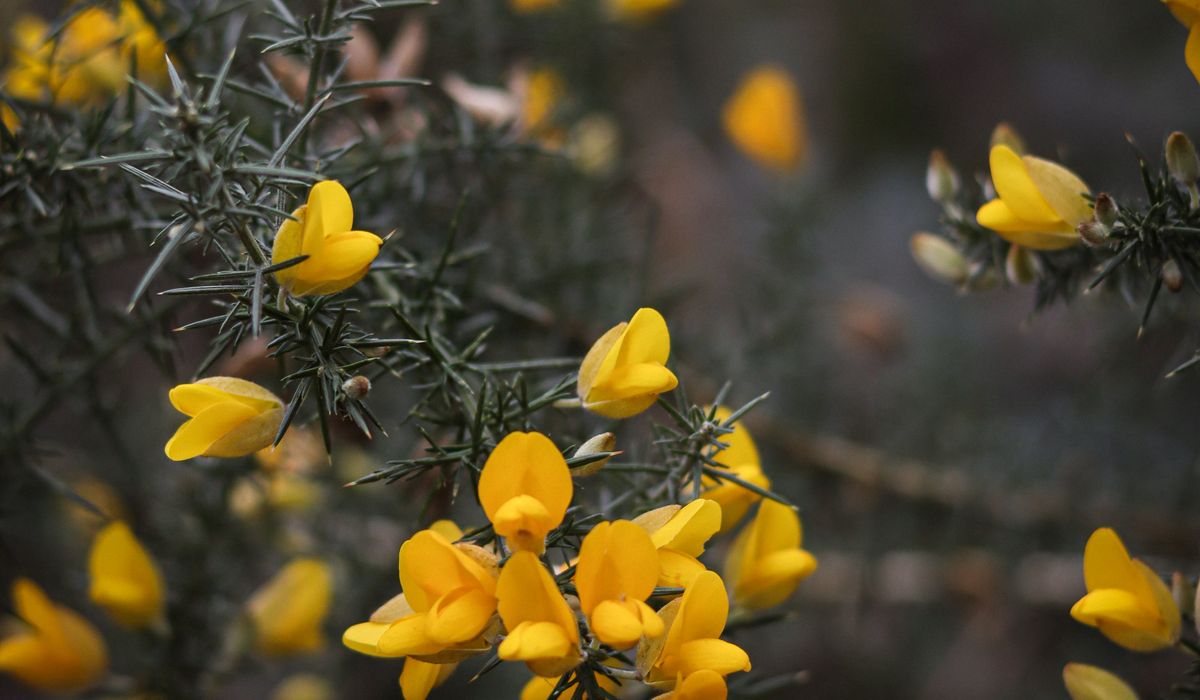
Why gorse earns its place on the coast
Gorse is one of those native shrubs that seems to laugh at salt-laden gales. While other plants sulk, turn brown and give up, common gorse (Ulex europaeus) carries on flowering, fixing nitrogen and providing dense, spiny shelter for birds and insects. On an exposed coastal plot, few shrubs combine such toughness with real wildlife value. The coconut-scented yellow flowers are a joy on a warm spring day, and the dense branching habit makes gorse an excellent low windbreak in its own right.
That said, gorse has firm opinions about how it likes to be treated. Give it what it wants — sharp drainage, an open sunny spot and a light annual trim — and it will thrive for decades. Get those things wrong, especially drainage, and it will sulk, rot or become leggy and bare at the base. This guide covers the practical steps that make the difference on windy, salt-sprayed sites.
Choosing the right gorse for your garden
Three native gorse species are worth considering, and the right choice depends on your space and exposure.
- Common gorse (Ulex europaeus) grows to around 2.5 metres and flowers mainly from March to May. It is the biggest and boldest, ideal for a sheltering hedge on a larger plot, but it can become leggy if not trimmed.
- Western gorse (Ulex gallii) is lower, usually to 1.5 metres, with a tighter, more wind-resistant habit and flowers in late summer and autumn. It suits exposed, wind-blasted gardens particularly well.
- Dwarf gorse (Ulex minor) reaches only about 60 centimetres and flowers in summer. It is the best choice for small gardens, front-of-border planting or container growing on a patio.
Where possible, buy British-grown stock from a reputable nursery, or grow from seed collected locally. Provenance matters on tough coastal sites: plants raised from parents that have survived similar conditions tend to establish more reliably.
Getting drainage and soil right
Gorse dies in waterlogged ground. It wants free-draining, acidic to neutral soil — roughly pH 4.5 to 7.0 — and it actively prefers thin, stony, nutrient-poor ground. If your garden is sandy or gravelly, you are already winning.
On heavy clay, plant on a mound or in a raised bed. Dig a planting hole, fork the base to break up any pan, then backfill with a mix of garden soil and coarse grit or horticultural sand. Do not add rich compost or manure: it encourages soft, sappy growth that wind and salt will shred. A mulch of gravel around the base keeps weeds down and reflects heat without enriching the soil. If your soil is chalky, gorse will struggle; grow dwarf gorse in a large container of ericaceous compost instead.
Planting and wind protection for young plants
Plant in autumn or early spring, when the soil is moist but not frozen. Water the young plant in well and firm the soil around the roots. Young gorse is surprisingly brittle in strong wind, and the roots need time to anchor before top growth takes off.
On very exposed sites, rig a temporary windbreak: woven plastic mesh on stakes, about one metre high, positioned on the windward side roughly 30 to 45 centimetres away from the plant. Alternatively, plant in the lee of an established hedge, wall or bank. Remove the windbreak after two or three winters, once the gorse has rooted deeply. If you are planting a gorse hedge, space plants 45 to 60 centimetres apart. Group planting helps young plants shelter one another, and the resulting thicket is far more wind-firm than isolated specimens.
Gentle annual pruning for dense, healthy growth
The golden rule with gorse is simple: never cut into old, bare wood. Gorse does not regenerate from old wood, so a hard prune into the brown heart of the shrub usually kills it or leaves a permanent dead patch. Instead, prune lightly every year, immediately after flowering.
- Common gorse: trim after May.
- Western gorse: trim after October.
- Dwarf gorse: trim after July.
Use secateurs or hedge shears to remove about one-third of the current season's soft growth. This keeps the plant bushy, encourages more flowers next year and prevents the leggy, bare-bottomed look that ruins so many coastal gorse plants. On young plants, tip-prune in the first two years to encourage branching from low down. Always wear thick gloves, and avoid pruning in freezing weather. If a mature plant has already become bare and woody at the base, replacement is usually kinder than a drastic cut.
Companions and long-term care
Once established, gorse needs very little from you. It fixes its own nitrogen, so no feeding is required. Water only during the first two summers if rainfall is low. Keep the area around young plants clear of competing weeds and grass for the first two years. Rabbits and deer may nibble young shoots, so protect new plants with spiral guards.
Good native companions for a coastal gorse patch include sea thrift, wild thyme, sea campion, heathers and fine fescue grasses. These share the same love of sharp drainage and low fertility, and they knit together to form a resilient, wind-proof matrix. In a small garden, dwarf gorse is the sensible choice; it will not outgrow its space or seed itself quite so freely. Left to its own devices, gorse can live for thirty years or more, flowering reliably every season and asking for nothing beyond sun, air and a light annual trim. On a windy coast, that is about as good as gardening gets.



John Doe
14 January, 2022Having no content in post should have adverse..
Chauffina Carr
10 April, 2022We use these tests all time! Killer stuff!
Jim Séchen
16 July, 2022Thanks for all the comments, everyone!