


Why Gorse Divides Coastal Gardeners
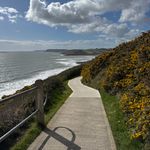
Gorse (Ulex europaeus) is one of those plants that provokes strong opinions on a coastal plot. In Cornwall, Pembrokeshire, western Scotland and along the windswept edges of East Anglia, it will happily colonise any patch of bare, sandy or gravelly ground you leave open for more than a season. Its yellow flowers scent the whole headland in April, and the dense, thorny architecture of a mature bush is one of the best nesting sites any British bird could ask for.
The problem is that gorse does not know when to stop. Left alone, a single stand can double its footprint every few years, shading out the very coastal wildflowers — spring squill, thrift, kidney vetch — that make a seaside garden worth having. The trick is not to declare war on it, but to manage it. A wildlife-friendly plot needs gorse somewhere, just not everywhere.
Understanding How Gorse Spreads
Before you reach for the loppers, it helps to know what you are dealing with. Gorse reproduces in three ways, and each demands a slightly different response.
- Seed: A mature bush can drop thousands of seeds a year, and they remain viable in the soil for up to thirty years. Disturbing the ground around a stand simply triggers a fresh flush of seedlings.
- Layering: Lower branches that touch bare soil will root where they land, quietly extending the bush outwards.
- Regrowth from cut stumps: Gorse coppices vigorously. A stump cut in February will throw up multiple new shoots by June, often denser than before.
The lesson is straightforward: a single tidy-up will not solve the problem. Management is a rhythm, not an event, and it needs to be repeated across several seasons before the seed bank quietens down.
Cutting With Purpose, Not Panic
The best window for cutting gorse on the coast is late summer into early autumn, ideally August to early October. Birds have finished nesting, insects are still using the flowers, and the plant is approaching its slower winter growth. Cutting in spring removes nesting habitat and often provokes the most aggressive regrowth.
On a small plot, a brushcutter with a metal blade, or even a sharp slasher for thin stems, is enough. Aim to cut stems close to the ground, but leave 10–15cm of stump — cutting flush to the soil surface tends to leave a woody mass that resists decay. If you are working near a boundary or a public footpath, check the status of the hedge or boundary feature first; some coastal gorse forms part of historic field boundaries and may be protected.
Rather than clearing a whole stand in one go, work in rotation. Take a third of the area each year and leave the rest untouched. This keeps a continuous supply of dense, thorny cover for nesting linnets, whitethroats and stonechats, while steadily reducing the overall footprint.
Putting Grazing to Work
Where space allows, grazing is far more elegant than machinery. Ponies, goats and hardy sheep will all browse young gorse shoots, and they do the job gradually enough that the stand thins rather than collapses.
- Goats are the most enthusiastic gorse-eaters and will tackle bushes up to about a metre high. They need secure fencing and, ideally, a varied diet alongside the gorse.
- Exmoor and Dartmoor ponies will nibble new growth and trample seedlings, which is exactly the kind of light, ongoing pressure a coastal plot needs.
- Soay or Manx Loaghtan sheep are useful on lighter infestations and cope well with salt-laden wind.
Grazing works best in winter and early spring, when softer shoots are palatable and other forage is scarce. If you cannot keep livestock yourself, local conservation grazing schemes or a neighbouring smallholder may be willing to help. Even a few weeks of browsing each year will keep a stand in check and open up the ground beneath for wildflowers.
Keeping the Wildlife You Want
It is worth being deliberate about which gorse you keep. A dense, mature stand with a thicket structure is far more valuable than a scattering of straggly bushes. Aim to retain blocks of at least three to four metres across, preferably on the leeward side of the plot where they also act as a windbreak for tender coastal plants.
Leave some stands to flower fully. Gorse is one of the few native shrubs that flowers through winter and early spring, and its blooms are a lifeline for early bumblebees, hoverflies and the gorse shield bug. Cutting a stand in February may tidy the view, but it strips the plot of one of its best early-season nectar sources.
When you do clear an area, resist the urge to dig it over. Light raking and a mulch of bark or gravel will suppress seedlings without bringing more gorse seed to the surface. Any coastal wildflower seed you sow — sea campion, wild carrot, yellow-horned poppy — will establish better if the ground is left firm and undisturbed.
A Workable Annual Rhythm
Most coastal gardeners find a simple three-year cycle keeps gorse manageable without exhausting them. In year one, cut a third of the stand in late summer and let livestock graze the regrowth through winter. In year two, leave that section to recover and cut the next third. In year three, cut the final section while the first is browsed lightly again.
Hand-pull seedlings as you see them, especially in gravel paths and around the base of walls where they quickly become a nuisance. Wear thick gloves and stout boots — gorse thorns are unforgiving, and a scratch from a coastal bush often takes a while to heal.
Done well, this is not a battle. It is a slow conversation with a plant that has shaped British coastal landscapes for millennia, and there is room in it for both the gardener and the wildlife that depends on it.



John Doe
14 January, 2022Having no content in post should have adverse..
Chauffina Carr
10 April, 2022We use these tests all time! Killer stuff!
Jim Séchen
16 July, 2022Thanks for all the comments, everyone!