

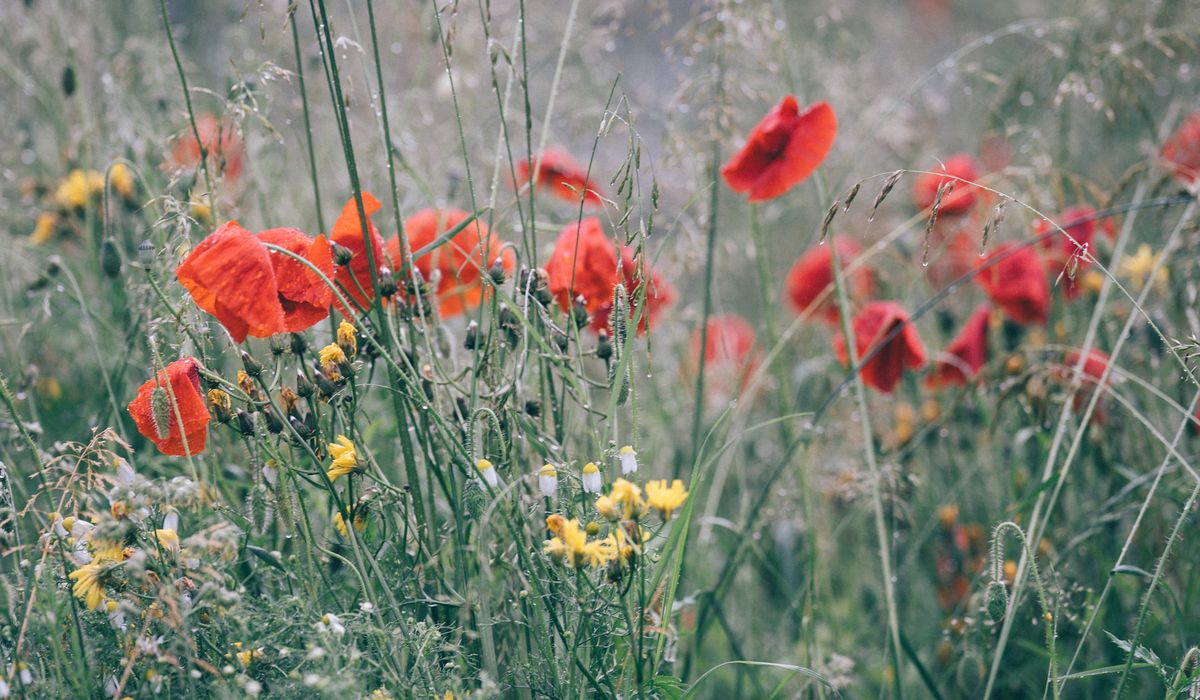
Why Coastal Plants Belong in Gravel
If you have ever walked a cliff path in Cornwall or skirted a shingle beach in Norfolk, you have seen the conditions these plants call home: thin, hungry soil, relentless wind, salt spray, and rainwater that vanishes almost as soon as it lands. Thrift and sea campion have spent millennia adapting to exactly that. Give them a gravel garden — a bed of stone chippings over gritty, sandy ground — and you are not forcing them into an unfamiliar setting. You are rebuilding the one they evolved for.
The reward is a planting that largely looks after itself. Both are UK natives, both are drought-tolerant once established, and both will happily fill the dry, sun-baked corners where more conventional border plants sulk, flop or rot at the crown.
Getting to Know Thrift and Sea Campion
Thrift (Armeria maritima), often called sea pink, forms tight, hard cushions of narrow, dark green leaves. From April to July it sends up wiry stems topped with dense pink flowerheads that look and feel like small pom-poms. It shrugs off wind, holds its shape right through winter, and frequently produces a lighter second flush in early autumn. Few plants look better for a battering.
Sea campion (Silene uniflora) is looser in habit, spreading into low mats of grey-green foliage. Its white flowers appear from late May into August, each with a distinctive inflated, balloon-like calyx that gives the display a papery, lantern-like quality. It self-seeds freely but politely, wandering into crevices and paving gaps without ever becoming a nuisance.
Both are compact — rarely more than 15–20cm tall in flower — which makes them ideal for the front of a border, a rockery ledge, or the narrow strip between path and wall.
Building the Right Kind of Ground
Drainage is everything. Thrift in particular will survive a fortnight of neglect but not a fortnight of wet feet. Work with what you have, but be prepared to improve it:
- On heavy clay, dig in coarse horticultural grit or sharp sand at roughly one part grit to one part soil, to a spade's depth.
- On lighter or already sandy ground, a 5cm layer of 10–20mm gravel used as a mulch is usually enough.
- Never add rich compost or manure. Lush, fast growth makes both species soft, floppy and short-lived.
- Plant on a slight mound so the crown sits above the surrounding surface and rainwater runs away from it.
- Choose full sun. A little shade is tolerated, but flowering and compactness suffer badly.
Planting into Gravel and Paving Gaps
Water the pot thoroughly an hour before planting, then tease out the roots gently — they are usually tightly wound. Set the plant at the same depth it was growing in the pot, firm it in, and draw gravel right up to the collar of the plant, but not touching the leaves. Water once to settle the roots, then leave it alone.
Space thrift about 25–30cm apart and sea campion a little wider, at 30–40cm, since it spreads further. For paving gaps, scrape out the old soil and any moss, refill with a gritty mix of two parts sand to one part loam, and tuck in small divisions or plugs. Sea campion in particular will thread itself along a path edge and soften the hard lines of stone beautifully.
In the first summer, water only during genuinely prolonged dry spells. Encouraging roots to chase moisture downwards is what makes these plants tough in later years.
Care Through the Year
After flowering, shear thrift back lightly with garden shears, removing the spent flower stems and any straggly growth. This keeps the cushion tight and often prompts that second autumn flush. Sea campion benefits from a harder cut in late summer, taking roughly a third off the mat, which prevents it going bald in the middle.
Lift and divide both plants every two or three years in early spring or autumn, discarding the woody centre and replanting the vigorous outer pieces. Winter wet, rather than cold, is the real killer: remove fallen leaves from around the crowns, keep organic mulches well away, and consider raising plants onto a gravel mound if your soil sits wet in January. Slugs and snails may nibble new growth in a damp spring, but healthy, well-drained plants rarely suffer badly.
Good Companions and Planting Ideas
Thrift and sea campion combine naturally with other coastal natives. Try sea lavender for late-summer colour, wild thyme and kidney vetch for low cushions, bloody cranesbill for a scatter of magenta, and sheep's fescue for fine, blue-green texture. Non-native stalwarts such as Dianthus, small sedums and purple sage will sit alongside them without looking out of place.
A few schemes worth trying:
- A ribbon of thrift edging a gravel path, with sea campion spilling over the outer edge.
- Sea campion planted into the gaps of a stone or brick patio, allowed to knit the paving together.
- Thrift in a shallow terracotta pan on a sunny wall, where it will flower harder than almost anything else.
- A raised gravel bed mounded over rubble, planted with both species plus thyme and fescue for a genuine cliff-top feel.
Get the drainage right and these two will reward you for years — compact, colourful, salt-tolerant and utterly at home in the driest, sunniest, most awkward corners of a British garden.



John Doe
14 January, 2022Having no content in post should have adverse..
Chauffina Carr
10 April, 2022We use these tests all time! Killer stuff!
Jim Séchen
16 July, 2022Thanks for all the comments, everyone!